
Table of Contents
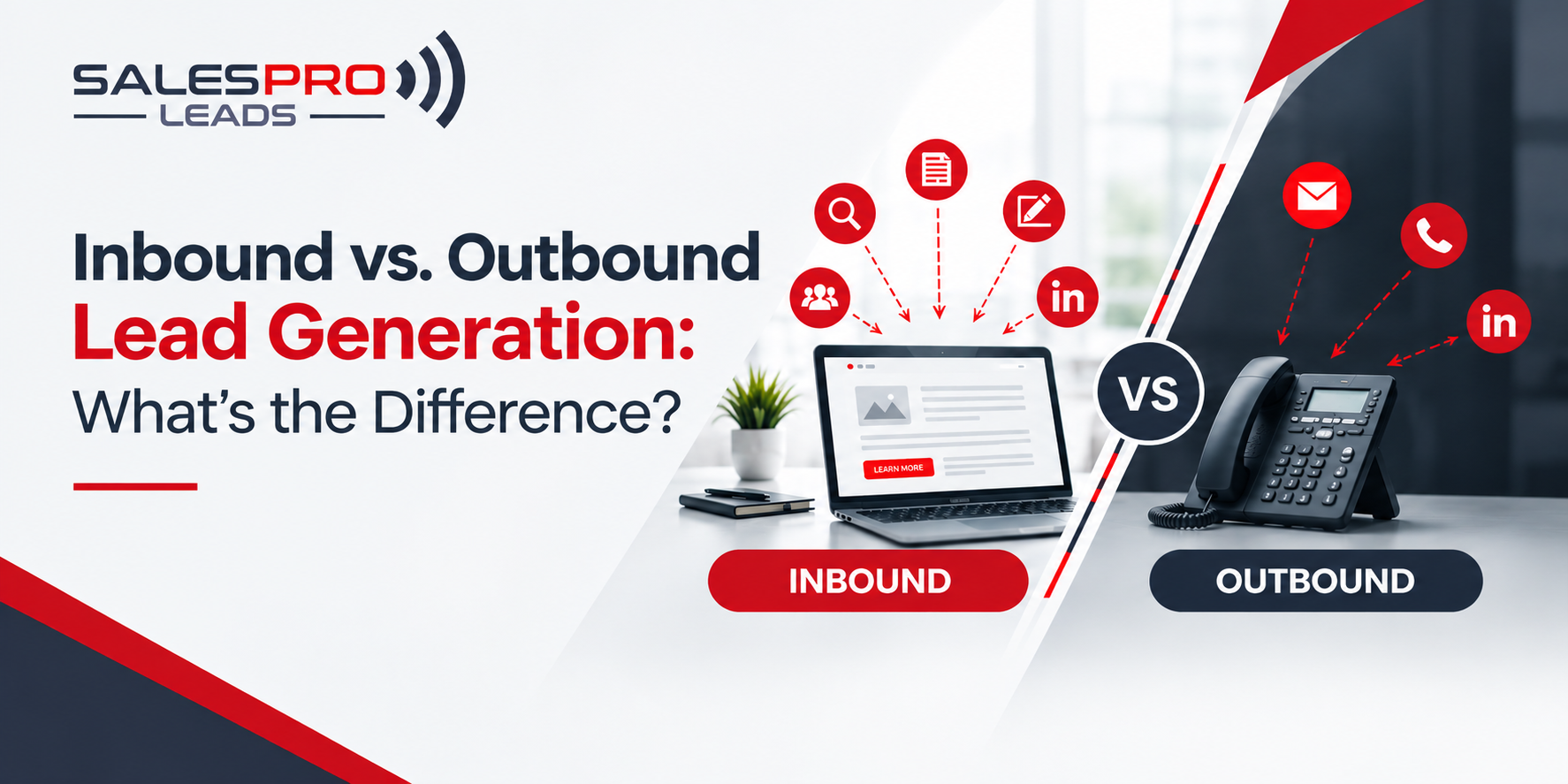
Quick answer: Outbound means your team initiates contact — through cold calls, cold email, direct mail, and social selling. Inbound means prospects find you first through content, search, webinars, and referrals. Outbound can start conversations sooner, though revenue timing still depends on your sales cycle. Many B2B teams use both, adjusting the mix as pipeline needs shift.
Your choice shapes where your budget goes, what your sales team does daily, and how quickly your pipeline moves. This guide explains how each approach works, where they differ, and when outbound deserves a larger share of your investment.
What Is Outbound Lead Generation?
Outbound puts your pipeline on a defined schedule. Your team selects specific accounts, identifies relevant contacts, and reaches out directly — on a timeline your team controls. That precision gives sales teams a clear starting point for prioritizing follow-up based on fit and timing.
Paid advertising doesn’t fit neatly into either category. Its classification depends on campaign purpose and targeting: campaigns reaching audiences showing early intent function closer to inbound; campaigns where your team defines the audience operate as outbound.
According to RAIN Group’s Top Performance in Sales Prospecting study, 82% of buyers accept meetings at least sometimes with sellers who reach out proactively. That’s a signal of openness, not a guarantee. Outreach still needs to be relevant and well-targeted to convert into a booked meeting.
What Is Inbound Lead Generation?
Inbound works in the opposite direction: prospects find you first. You publish content, optimize for search, host webinars, and stay active on organic social so buyers land on your answers when they research a problem. By the time a prospect fills out a form, prior engagement can provide useful context — though it doesn’t guarantee they’re ready to buy. The tradeoff is time: content and SEO often take time to build visibility and an audience.
Outbound vs. Inbound: Key Differences
Factor | Outbound | Inbound |
Speed | Conversations can start within days, depending on preparation and execution. | Results typically build over time. |
Cost over time | Costs depend on ongoing prospecting activity, follow-up, and execution. | Requires investment in content and SEO; cost per lead may decrease over time. |
Targeting | Teams select accounts, contacts, and outreach timing. | Attracts prospects through content, with less direct control over who engages. |
Lead warmth | Prospects may range from unfamiliar to engaged, depending on personalization and prior contact. | Prospects may be more familiar with the business, but engagement does not guarantee sales readiness. |
Best fit | Defined account lists, new markets, product launches, and enterprise deals. | Building visibility, reaching buyers who research independently, and capturing existing search demand. |
Treat cost comparisons as directional — actual figures vary widely by channel mix and execution.
When Outbound Makes More Sense
Outbound can be particularly effective when your best-fit buyers are a small, defined group that content alone is unlikely to reach on your timeline. For lesser-known companies, outbound is one way to earn a spot on a buyer’s shortlist before a formal evaluation begins.
B2B purchase decisions today routinely involve large groups of internal and external stakeholders. With that many people involved, one internal champion is rarely enough. Account-based marketing (ABM) is built for exactly this challenge — coordinating outreach across relevant stakeholders within a target account so your team shows up consistently across the buying group. Timing matters too: a product launch or entry into a new market favors direct outreach over waiting for organic traffic to build.
Where Appointment Setting Fits
Appointment setting is where outbound activity converts into potential sales opportunities. SDRs prospect into target accounts, qualify contacts, and book meetings with decision-makers who meet your criteria. Those meetings become the sales conversations that account executives can develop into qualified opportunities — though not every booked meeting will advance that far. Appointment setting is the link between outbound outreach and a pipeline your closing team can actively work.
How Inbound and Outbound Work Together
Many B2B teams run both motions because each covers ground the other can’t. A prospect who attends your webinar is inbound-sourced, but outbound teams can use that signal to prioritize who to contact first. Meanwhile, outreach conversations surface the questions that make for stronger content. The two approaches reinforce each other when executed together.
FAQ: Outbound Lead Generation for B2B
What is outbound lead generation?
Your team initiates contact through cold calls, cold email, direct mail, and social selling. In this context, leads are people or organizations that enter your lead-management process as a result of direct, team-initiated outreach.
Is outbound still effective for B2B?
Yes, when it’s targeted. RAIN Group’s research found that 82% of surveyed buyers accept meetings with proactive sellers at least sometimes. Outreach still needs to be relevant to convert that openness into a booked meeting.
What’s the main difference between inbound and outbound leads?
Outbound means your team contacts prospects first. Inbound means prospects find you. Outbound leads typically need your first touch to create interest; inbound leads have already raised a hand.
Which costs more?
Cost varies widely by channel mix, content investment, and conversion rates. Compare cost per qualified opportunity — not cost per lead — for a more accurate picture.
Should B2B companies use inbound or outbound?
The right mix depends on your pipeline needs, target audience, resources, and time horizon. Most teams adjust the balance as their goals evolve.
How SalesPro Leads Supports B2B Lead Generation
Choosing the right mix is only part of the equation — execution is where pipeline is actually built. SalesPro Leads specializes in B2B lead generation and appointment setting services for companies that need conversations started on a defined timeline. The team runs targeted outreach into your defined account list and books meetings with decision-makers who meet your agreed qualification criteria, so your account executives can focus on the right prospects.
Contact SalesPro Leads to discuss how targeted outbound outreach and appointment setting could support your sales goals.
Ready to sell smarter?
SalesPro Leads offers industry leading B2B Lead Generation and Appointment Setting services that provide sales intelligence to super-charge your sales team.
Schedule a call now!