

Are you wondering about the role of a sales development representative? Review this overview of the position and see how it benefits an organization.
Sales development, it is arguably the most important area that a company needs to develop to keep its business afloat.
Sales generation can be so important that some companies devote up to 40% of their revenue towards it. With such a crucial role to play, companies are now investing in a new position: the Sales Development Representative (SDR).
Sales Development Representatives act as the bridge between the marketing and sales teams. They are responsible for identifying and qualifying potential customers for the sales team to pursue. In other words, they find leads and determine whether or not those leads have a high likelihood of becoming paying customers.
The role of an SDR is not just about making calls and sending emails. It requires a combination of skills, including but not limited to sales acumen, communication skills, critical thinking abilities, and the ability to work in a fast-paced environment. SDRs need to be highly organized, as they often handle large volumes of leads and must track their progress through various stages of the sales funnel.
If you want to improve your company’s sales process, you may be looking at hiring a sales development representative. However, you may be questioning if they are worth the potential salary.
What do sales development representatives do? This guide will go over their most important tasks.
Handling Lead Generation
One of the key responsibilities of a sales development representative is effectively managing lead generation. For those who are unfamiliar, lead generation involves identifying potential leads who may be interested in purchasing your company’s products or services.
Sales development reps play a pivotal role in sales prospecting, a fundamental step in the sales process that involves searching for potential customers or clients (prospects) who might be interested in the company’s products or services. Sales development representatives meticulously research and reach out to these prospects. By engaging in initial conversations, they aim to gauge the prospect’s interest level and their fit as a potential customer.
Through effective questioning and listening, sales development representatives can uncover valuable information about the prospect’s business needs, challenges, and buying intent, thereby qualifying them as a viable lead before passing them on to the sales team for further engagement.
This process not only increases the efficiency of the sales cycle by focusing on high-quality leads but also significantly saves time and resources, ensuring that the sales team can concentrate their efforts on leads with a higher probability of conversion.
How do you find sales prospects?
Well, there are a few different ways to go about it. One way is by using social media. You can see what people actively engage with your company’s pages, what other companies are out there that can use your product or service, what people in certain company positions think about your product or service, and more.
In addition to social media, there are several other ways a sales development representative can identify potential leads.
Cold calling and emailing can also be effective. By reaching out directly to potential customers, sales reps can introduce the company and gauge interest in its offerings. However, it’s important to ensure these methods are used strategically to avoid alienating potential customers.
Online platforms such as LinkedIn can be utilized to identify individuals who fit the customer profile of the company. By using LinkedIn’s advanced search and connection features, business development representatives can build a list of potential leads to contact.
Industry conferences and networking events can be a valuable source of leads. By networking with participants, sales representatives can find businesses that would benefit from the company’s products or services. Here, your sales executives will have a chance to interact with existing customers in your industry. Then, if talks go well, they can try to sell that representative into buying your product or service during or after the event. At worst, that lead can turn into another referral if you get turned down.
A sales rep can also help you with expanding your client referral list. If your representatives do a good job with the leads they close, they can open up the door to a lot more new business, as new customers can recommend the company to their friends and/or network.
About 92% of people trust recommendations from their friends over anything else. What this means is that if your salesmen get a new lead, they may not just close a sale on that person or company. They could open the door to anybody in that network.
Adapting to Changes in Sales Development Technology
Sales development has changed dramatically over the past two decades, and it continues to evolve. Business communication has moved from traditional phone systems to cloud-based platforms that connect voice, video, messaging, and software in one place. The best SDRs don’t resist these changes. They embrace them and use them to work smarter.
Today’s tools give sales development representatives a powerful advantage:
- Modern communication platforms let SDRs call, email, message, and video conference from a single system. This makes it easy to reach prospects on the channel they prefer and keep every conversation moving.
- CRM systems serve as the central record for every prospect. SDRs can log calls, store notes, track interactions, and see exactly where each lead stands in the sales funnel. Nothing falls through the cracks, and handoffs to the sales team stay smooth.
- Sales engagement tools help SDRs plan and manage outreach at scale. They organize multi-step sequences of calls, emails, and social touches, set follow-up reminders, and track which messages earn responses.
Technology makes outreach faster and more organized, but it doesn’t replace the fundamentals. The tools support the conversation. The SDR still has to make it count.
The industries SDRs serve are just as varied as the tools they use. A single representative may prospect for telecom and unified communications solutions, contact center as a service (CCaaS), wireless networking, video conferencing and collaboration, Software as a Service (SaaS), mobile applications, managed services, or IT support services. Each industry comes with its own terminology, buyers, and business challenges. SDRs who take the time to understand a prospect’s industry ask sharper questions, speak with more credibility, and spot relevant opportunities faster. Still, the core skills never change. Whatever the solution, an SDR with strong communication skills, persistence, and the ability to communicate the business value proposition while identifying needs can consistently deliver quality leads in any industry.
Contacting Leads
After sales team members start trying to develop leads, the next thing they have to do is contact those leads. They are going to have to get information such as a person or company’s name, phone number, email address, certain interests, and more.
Managing Time and Maintaining a Consistent Prospecting Routine
Time is the one resource an SDR can never get back. Between deadlines, quotas, and a growing list of administrative tasks, the real work of prospecting can easily get pushed aside. The most successful sales development representatives refuse to let that happen.
Top-performing SDRs treat prospecting as a non-negotiable part of their day. Many experienced reps don’t even hit their stride until they’ve spent three or more hours on the phone. That level of output doesn’t happen by accident. It takes deliberate time allocation.
The most effective approach is to block dedicated time on the calendar for each core activity:
- Calls: Reserve focused blocks for phone outreach, ideally when prospects are most likely to answer.
- Emails: Set aside time to write personalized messages instead of squeezing them in between other tasks.
- Research: Schedule time to study prospects, companies, and industries before reaching out.
- Follow-ups: Protect time to revisit warm conversations and keep promising leads engaged.
Administrative work like CRM updates, internal meetings, and reporting still matters. But it belongs in its own set windows, outside prime outreach hours, so it never consumes the time that builds your pipeline.
Consistency is what turns effort into results. Sales development takes time to grow, and a strong pipeline is built one call at a time. SDRs who show up for their prospecting blocks every day create steady momentum, while those who prospect only when they find a spare moment watch their pipeline dry up.
A sales development rep should have a good idea of what this lead’s particular needs are. This is especially the case if they develop the lead themselves.
However, just because they have a list of leads, does not mean that they are going to be successful in closing them. In all likelihood, a good proportion of those leads will ignore or reject your sales professionals.
Overcoming Barriers to Reaching Decision-Makers
Before an SDR can even pitch, they have to reach the right person, and that’s often the hardest part of the job. Automated phone systems soak up minutes and send callers in circles. Gatekeepers screen calls. Decision-makers sit in back-to-back meetings or let unknown numbers go to voicemail. Just getting someone on the phone can be a job of its own.
Skilled SDRs overcome these obstacles with a smart, patient approach:
- Identify the right contact first. Research the organization’s structure on LinkedIn and the company website so you know exactly who owns the decision before you dial.
- Navigate automated systems efficiently. Learn the company directory, use dial-by-name options, and note the extensions that reach real people.
- Treat gatekeepers as allies. Be courteous, state your purpose clearly, and ask for guidance on who handles the area you’re calling about. A respectful approach often opens doors.
- Try different times. Early mornings and late afternoons often catch busy decision-makers before or after their meetings.
- Use alternative channels. When phone calls stall, follow up with a personalized email, a LinkedIn message, or a voicemail that references your other outreach.
- Stay professional every time. Each interaction, even with an assistant or a voicemail box, shapes how the prospect sees your company.
Above all, successful prospecting depends on meaningful human interaction. Automation and technology can help, but they can’t replace a real conversation. Armed with the right questions and plenty of patience, SDRs apply the human touch that uncovers genuine needs. At the end of the day, their mission is simple: to introduce organizations that truly need each other.
That is because, in some instances, sales reps are going to reach out to leads via cold calls or cold emails. In other words, they may have never directly spoken to this person or company before. As a result, the latter party may be skeptical about doing business with your sales executives.
However, one big trait a sales development representative should have that will help in this situation is persistence. In sales, you are going to need your salesmen to have this trait to survive. Sales reps are likely going to get told no by a future client at first. However, they have to have the strength to shake off that rejection and go back to that lead with an even stronger pitch. Then, businesses should start to see some lead conversions.
Your sales executives must be ready to play a long game. They will need to keep contacting potential leads, building relationships and trust, and being ready to seize any opportunity that arises.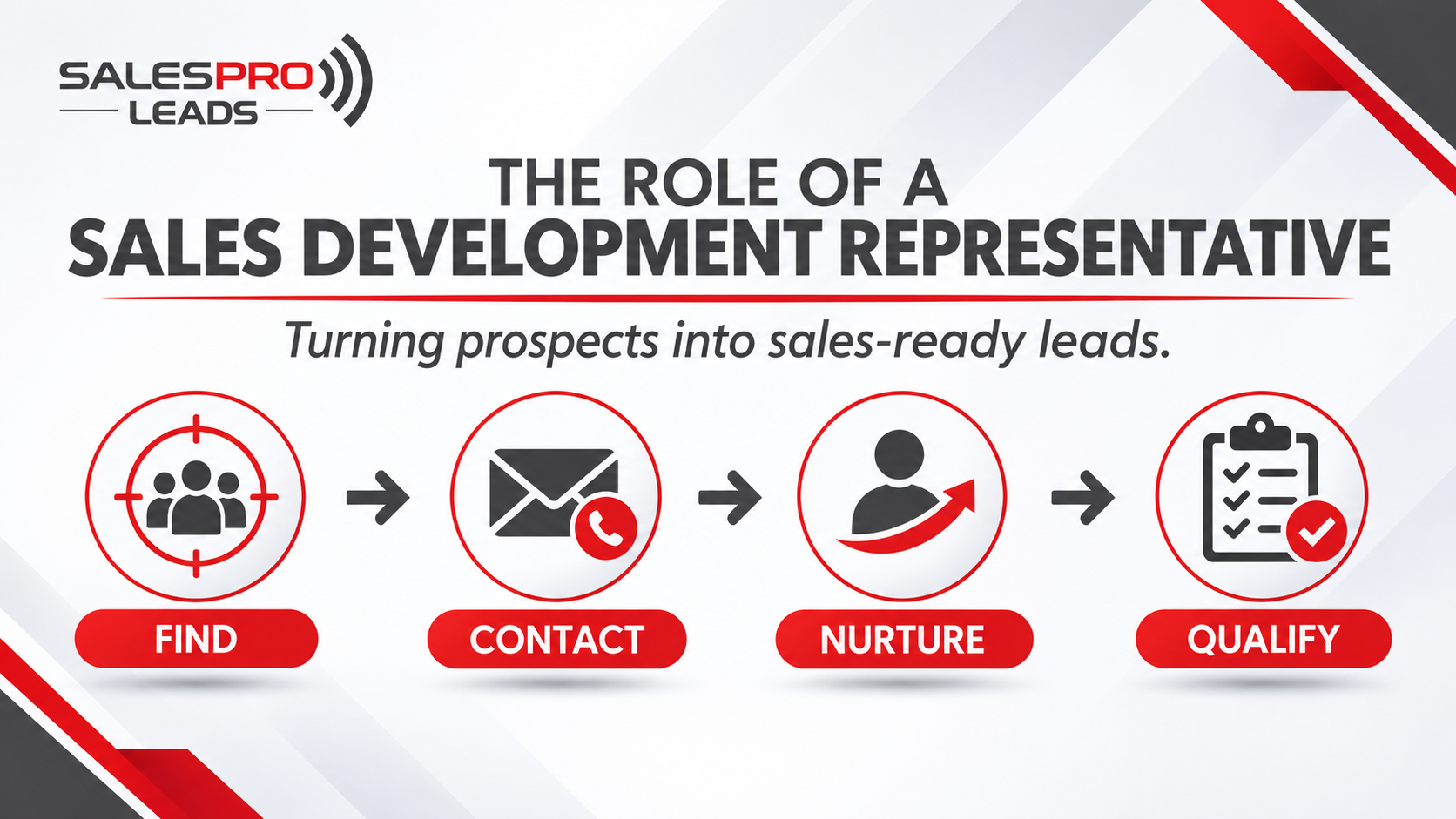
Nurturing Quality Leads
Another crucial role of a sales development representative is lead nurturing. This involves not only regularly checking in with leads, but also providing them with tailored and relevant information that addresses their specific pain points and challenges. By understanding their unique needs and concerns, representatives can deliver targeted content and resources that keep the leads engaged and interested.
Lead nurturing is particularly important because not all leads are ready to make a purchase when they are first contacted. Some may require additional time to evaluate their options, compare different solutions, or gather more information before they feel confident enough to commit to a purchase. By consistently nurturing these leads and providing them with the necessary resources, representatives can increase the chances of converting them into satisfied customers.
Moreover, lead nurturing is not just about driving sales, but also about building and maintaining long-term relationships with potential customers. By consistently providing valuable and helpful information, representatives can establish themselves as knowledgeable and trustworthy resources for the company’s offerings. This builds credibility and fosters a sense of trust, making it more likely that leads will turn to the representative and the company when they are finally ready to make a purchase.
In summary, lead nurturing is a multifaceted approach that involves regular communication, tailored content, and building strong relationships with potential customers. By investing time and effort in this process, sales development representatives can foster engagement, increase conversion rates, and ultimately drive business growth.
Qualifying Leads
One aspect that can sometimes be overlooked is the need for the sales team to qualify the generated leads. It’s important to understand that even if the sales development representatives successfully generate interest from individuals or companies, not everyone will be a good fit for a long-term partnership.
A qualified lead is essentially a potential customer who has been assessed using certain criteria to determine their likelihood of purchasing a product or service. The qualification process helps in optimizing sales strategies and ensuring that the sales pipeline is filled with high-potential leads, thereby enhancing the efficiency and effectiveness of the sales efforts.
The practice of qualifying leads involves asking targeted questions to gauge the lead’s potential to become a customer. This is a vital role for sales development representatives as they interact with potential clients. Below are some strategies they can employ to effectively qualify leads.
Firstly, representatives should ask open-ended questions that allow leads to express their needs. Questions like “What challenges is your business currently facing?” or “What goals are you trying to achieve?” can provide valuable insights into whether your product or service could provide a solution.
Once a prospect shares their challenges, the SDR’s next step is to connect those challenges to the business value of your solution. The order matters. Great SDRs listen first and present benefits second. Instead of launching into a generic sales pitch, they tie specific features and outcomes directly to the problems the prospect has just described. For example, if a prospect says their team wastes hours chasing unqualified leads, the SDR can explain exactly how your solution frees up that time and puts the focus back on closing deals. This approach keeps the conversation relevant, shows the prospect they’ve been heard, and builds the trust that moves a lead forward.
Secondly, sales reps could ask more probing questions about the lead’s budget and decision-making process. Queries such as “What is your budget for a solution like ours?” and “Who are the key decision-makers for this purchase?” help gauge the feasibility of a future business relationship.
These questioning techniques can help sales development representatives determine whether a lead has the need, budget, authority, and timeline to make a purchase – often referred to as the BANT (Budget, Authority, Need, Timeline) criteria.
Sales is a song and dance when it comes to making sure leads are good. Make sure your leads are properly qualified.
Improving Sales with Data-Driven Strategies
Sales development representatives also play an important role in monitoring lead conversion, utilizing data analytics, and collecting feedback to refine the sales process further.
Keeping track of the conversion rates from potential leads to actual sales is essential for understanding the effectiveness of sales strategies and practices. By analyzing data on lead conversion, sales executives can identify patterns, trends, and potential obstacles in the sales funnel, enabling them to adjust their approaches accordingly to improve outcomes.
Furthermore, data analytics provides sales development reps with insights into which types of communication and content are most engaging for leads, thereby optimizing future interactions.
Analytics helps them understand the best times to make contact, the most effective channels (email, phone, social media), and the types of messages that resonate with different segments of the target audience.
In addition to quantitative measures, qualitative feedback from leads and customers is invaluable. Sales professionals should actively seek feedback throughout the sales process, whether it leads to a conversion or not. This feedback can reveal areas for improvement, highlight strengths, and inform the development of more personable and effective sales tactics. It also plays a critical role in tailoring the sales approach to meet the evolving needs and preferences of the market.
By keeping a diligent track of lead conversion, leveraging data analytics for actionable insights, and valuing the feedback from interactions, sales development representatives can significantly enhance the effectiveness of the sales funnel, contribute to a higher conversion rate, and ultimately, drive the growth of the business.
Hire a Sales Development Representative
In summary, a sales development representative plays a crucial role in a company’s success. They are tasked with a wide range of responsibilities aimed at driving continuous growth, not only within the sales department but also for the entire organization. This includes identifying and qualifying potential leads, building relationships with prospects, nurturing sales opportunities, and collaborating with various teams to ensure seamless coordination and alignment toward achieving business objectives.
By proactively engaging with customers, staying updated on industry trends, and leveraging their expertise, sales development representatives contribute to the sustained expansion and prosperity of the company.
Additionally, a sales development representative will help enhance your sales strategies through data analytics and customer feedback, increasing your success odds in today’s fiercely competitive market.
Don’t leave your sales success to chance. With a team of expert sales development representatives from SalesPro Leads, you can boost your lead generation and nurturing process, ensuring a steady stream of qualified leads into your sales pipeline.
Let us do the heavy lifting so you can focus more on closing deals and growing your business. Contact us today and let’s take your sales performance to new heights!
Do you want to know more? Schedule a call with us today.